How Popular Is Tennis Amongst All Sports?
 July 17, 2026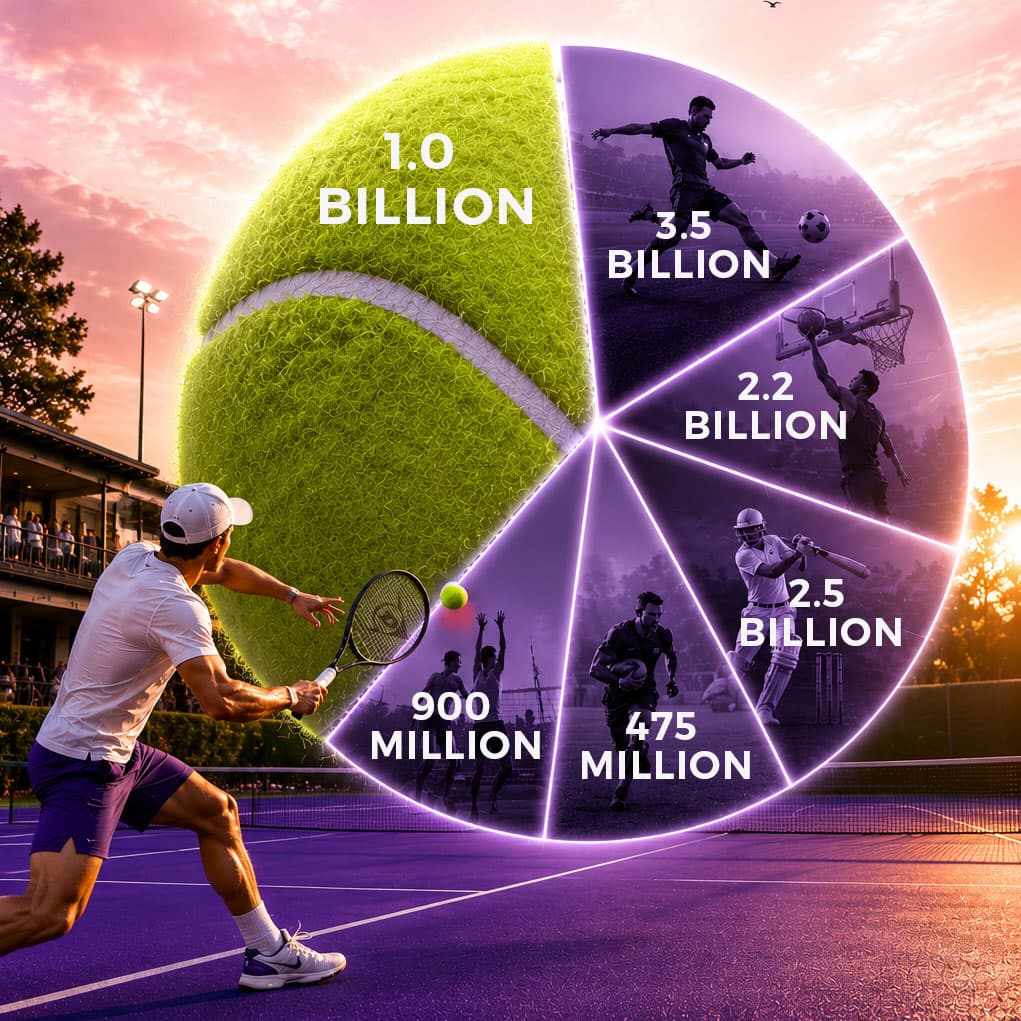
We are currently in the middle of one of the busiest periods on the global sporting calendar. The FIFA World Cup is captivating football fans, Wimbledon has just crowned its champions, The Open Championship is underway, and rugby's Greatest Rivalry Series continues to capture the imagination of supporters around the world.
With so many sporting events competing for attention, fans have more choices than ever before. Tennis is one of the world's oldest and most prestigious sports, but it is also facing the challenge of reinventing itself for a younger generation that has countless entertainment and sporting options available. So, how does tennis stack up against the competition?
Playing Popularity Tells a Different Story
While tennis is incredibly popular to watch, participation numbers tell a different story.There are an estimated 60 million recreational tennis players worldwide. Although that is a substantial number, it is well behind several other major sports:
- Football – approximately 400 million players
- Volleyball – approximately 900 million players
- Basketball – approximately 850 million players
- Table Tennis – approximately 700 million players
The biggest difference is accessibility.
Football, volleyball, basketball and table tennis can all be played with relatively inexpensive equipment and minimal facilities. A football only requires an open space and a ball. Basketball courts are common in many communities, while volleyball and table tennis are inexpensive to organise in schools and recreational centres.
Tennis presents a much higher barrier to entry. Players need a racquet, tennis balls and, most importantly, access to a suitable court. On top of that, tennis has a steeper technical learning curve than many other sports. Beginners often need coaching before they can enjoy consistent rallies, making qualified coaches another important—but sometimes limited—resource.
Historical sporting preferences also play a role. In many countries, children naturally gravitate towards sports that dominate local culture, making it more difficult for tennis to grow its player base from a young age.
The Future of Tennis
Despite these challenges, tennis continues to occupy a unique position in the sporting landscape. It remains the world's most popular racquet sport to watch and play, boasting iconic tournaments, global stars and a rich tradition that few sports can match.However, maintaining that position will require continued innovation. The sport needs to embrace the charismatic personalities of its new generation, making players more relatable and marketable in the same way football has successfully done for decades.
Equally important is investing in grassroots participation. Expanding access to courts, lowering barriers to entry and encouraging young players through schools and local clubs will help ensure tennis continues to thrive for future generations.
Tennis may face stiff competition for the attention of today's sports fans, but its global appeal, history and ability to produce unforgettable moments mean it remains firmly among the world's elite sporting codes. The challenge now is ensuring the next generation falls in love with the game just as previous generations did.
Comments
Checking sign-in…
Loading comments…